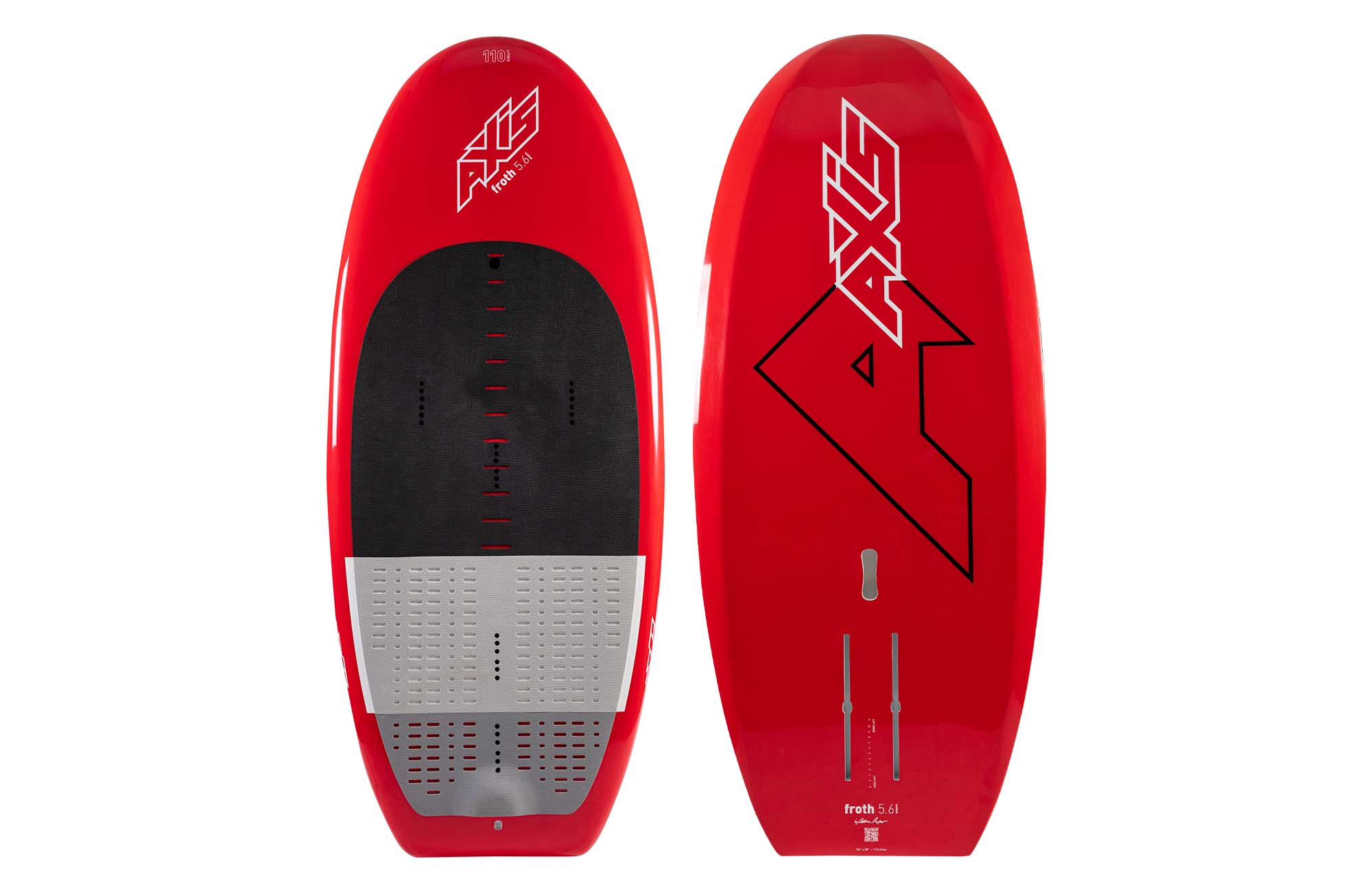
You have had your first flights. You can get on foil consistently, hold a direction and land without falling every time. Now comes the part nobody talks about enough: the intermediate plateau. This is where most wing foilers stay for months longer than they need to, because the jump from “flying” to “actually riding” requires a different approach to your gear and your technique. The AXIS Froth Carbon 110L is the board that bridges that gap – and this guide explains how to use it to progress faster.
Why board volume matters more than you think at this stage
Beginner wing foilers typically start on 130–150 L boards that almost float by themselves. The problem: a huge board hides your mistakes. It self-corrects, absorbs bad foot position and forgives late takeoffs. When you drop to 110 L (roughly body weight + 25–30 L for an 80 kg rider), the board stops compensating for you. You feel your feet, you feel the wing and you feel the foil – and that feedback is what accelerates learning. The Froth 110 is short enough to keep swing weight low in the air but still has the planing surface to get you moving in lighter winds.
The design changes AXIS made and why they matter for your progression
The latest Froth eliminated the angled chisel tail that older versions had. That tail was a holdover from surf design – on a foilboard it restricted the planing surface and slowed acceleration before takeoff. The new straight tail adds planing length, which means you get to foiling speed faster and in weaker gusts. AXIS also reduced the rail bevel, fading it out completely before the tail. The result is a wider, flatter planing surface at the back that straightens water flow and accelerates the board more efficiently. In practice: your takeoffs become more consistent in marginal conditions, which is exactly the scenario intermediate riders struggle with most.
Foot position: the single biggest unlock at the intermediate stage
Most intermediate riders fly with their back foot too far forward. It feels safe, because it reduces pitch sensitivity, but it also means you are riding with the board nose-high and the foil generating less efficient lift. The fix is a deliberate back-foot shift: move your back foot to sit directly over the mast track, or even slightly behind it. Hold that position through the takeoff. The board will feel more reactive at first, but your foil will fly cleaner and your flights will last longer. The Froth 110’s narrow tail makes this correction easier to feel than it would be on a wider beginner board.
Reading the wind window on a smaller board
On a 150 L board you can take off from almost any wind angle because the board carries enough speed. On the Froth 110 you need to be more deliberate. The sweet spot is a broad reach – roughly 100–130 degrees off the wind – where the wing generates maximum lift and the board planes fastest. If you are consistently struggling to get up, check your takeoff angle before blaming the board or the foil. Power the wing hard as you accelerate, sheet out slightly as you feel the board lift, then re-power once you are stable. The Froth’s updated planing surface rewards this technique because sub-foiling acceleration is noticeably stronger than older designs.
Which AXIS foil setup pairs best with the Froth 110L
At 110 L, most riders in the 70–90 kg range are ready to move away from the biggest, most stable wings. The Froth 110 works well across a wide range of front wings, but these are the setups we recommend most often:
- Intermediate all-round: AXIS Spitfire (900–1000 cm² range) with a 440 Freeride rear wing. Forgiving, plenty of glide, good turning.
- Progressing faster: AXIS Surge mid-size. More direct, surf-oriented feel, rewards good technique.
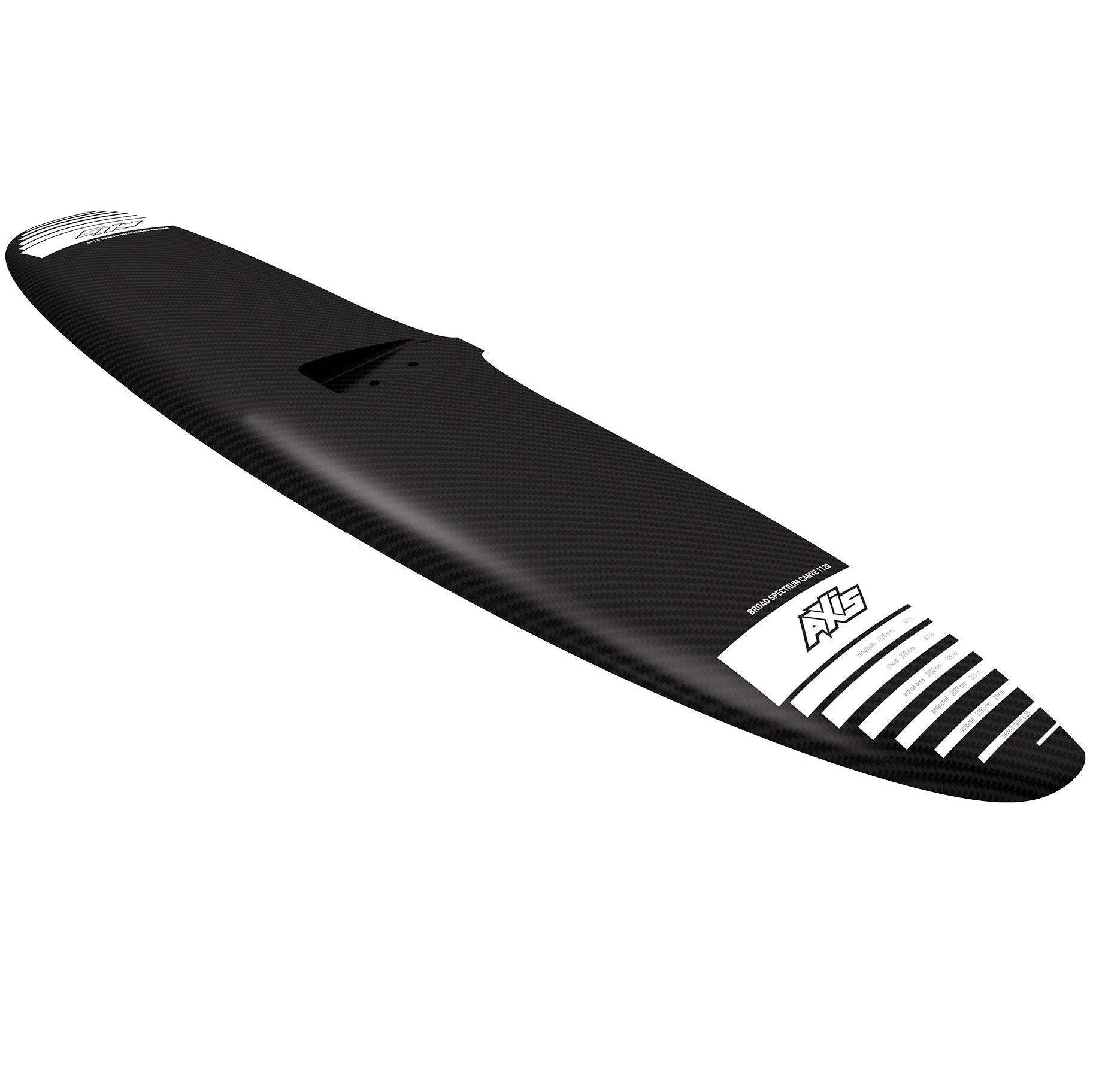
- Light-wind sessions: AXIS BSC (1000–1200 cm²). Huge range, stays flying in lulls, great for building confidence.
- Mast: 75–85 cm. Shorter masts are more forgiving while learning to control altitude; move to 85–90 cm when you are consistently flying without breaching.
Three drills to break through the intermediate plateau
1. The low-altitude hold. Get on foil and deliberately fly as low as possible without touching down for 30 seconds. This forces precise foot and wing control and builds the muscle memory you need for consistent altitude management.
2. The power-off glide. Once flying, completely depower the wing and see how long you can hold altitude purely on foil momentum. Count seconds. As your technique improves your glide time increases – this is a direct measure of your efficiency on the foil.
3. Tack without landing. Most intermediate riders land the board to tack. Try to stay on foil through the direction change by flying the board around and switching feet mid-air. You will fall a lot at first. That is the drill working.
When you are ready for the next board down
The Froth 110 is a board you will ride for a long time – but you will know when you have outgrown it. The signal is consistent flying in under 12 knots and feeling like the board is too big to manoeuvre once you are in the air. At that point, a Froth 90 or a Blast Carbon in a similar volume is the natural next step. The Froth Carbon 110L is €1,579 from our store with DPD delivery across Europe in 1–5 business days. Not sure if 110 L is right for your weight? Use our foil size calculator or contact us for a free setup consultation.